Bloodstone
Holding out, measured in hours.
What the tradition reads it as
Roman soldiers were said to carry it into a march and Victorian athletes into a race, which makes it one of the few pieces of folklore with a continuous paper trail. What the accounts agree on is unglamorous: staying upright through the long middle of something.
When people wear it
Put on for the shift that runs past its scheduled end, or the second half of a job you have already stopped enjoying.
What you are actually holding
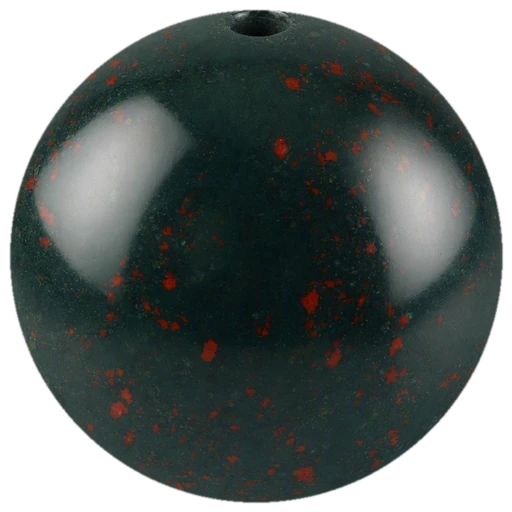
Dark green chalcedony spotted with red iron oxide. The medieval name came from those spots and the older Greek one came from a trick of reflected light; the mineral did not change, only the marketing. Spot density varies wildly bead to bead.
How to look after it
Hard-wearing at 7 Mohs, but the polish goes satin after a year or two of daily contact with skin — most owners prefer it that way, and a jeweller can re-polish a strand if you do not.
Bloodstone is a dark green chalcedony spotted with red iron oxide, and medieval Europe renamed it after those flecks — the older Greek name was heliotrope, for a trick of light. What carried forward was its association with holding out: the amulet of people whose work was measured in hours. The spots are iron, and that is all they are.
In a reading
Carried by marchers and racers for the long middle stretch.
Crystal meanings are described as cultural tradition, not fact. Stones and readings are offered for reflection, not as medical, financial, or legal advice.